How to read this list
Sorted by street price, cheapest first — prices are real-world street/retail, not MSRP, and they drift a few euros month to month. "Buy" links go to Thomann for the boxes (the big EU music retailer, ships everywhere with 3-year warranty) and AliExpress for the cable, because that's genuinely where the €15 version lives.
For guitar-through-browser you need exactly one thing: a Hi-Z instrument input plus drivers that don't fight you. More inputs, DSP, touchscreen meters — all optional comfort, priced accordingly.
The ladder — cheapest to keep-forever
USB guitar cable (generic)
≈ €15 · 1 instrument in · headphone out varies
A tiny interface built inside a cable — the AliExpress special. Solves level/impedance/latency to a basic degree: it works, it's a bit noisy on quiet passages, and when it dies it's €15. The honest answer for "let me just try this".
AliExpress →Behringer UMC22
≈ €45 · 1 instrument + 1 XLR in · the cheapest real box
The floor of "actual interfaces". Real Hi-Z input, MIDAS-designed preamp, +48V for a mic later. Drivers on Windows are occasionally grumpy and the build is plastic — but it makes sound correctly, which at this price is the whole review.
Thomann →M-Audio AIR 192|4
≈ €80 · 1 instrument + 1 XLR/line in · clean converters
Quiet converters and a proper metal case — the step up that feels like it. Bundled software is forgettable; the hardware isn't. Solid choice if the Behringer's plastic bothers you.
Thomann →Native Instruments Komplete Audio 1
≈ €99 · 1 instrument + 1 XLR in · big friendly gain knob
NI's minimal box: one huge input dial, honest meters, dependable drivers. Slightly less common now that NI pushes the Audio 2 — often discounted, which makes it a quiet bargain when in stock.
Thomann →Focusrite Scarlett Solo (4th gen)
≈ €110 · 1 instrument + 1 XLR in · the default answer
The recommendation you'll hear everywhere because it's the boring-correct one: excellent drivers, clean preamp, "Air" mode adds a pleasant top-end lift to dull pickups. If you ask "which one should I get" with no other context — this.
Thomann →Universal Audio Volt 1
≈ €120 · 1 instrument + 1 XLR in · vintage mode
The Scarlett's prettier rival: nicer-feeling build, a "Vintage" switch that warms the preamp flavor, UA's driver stack. Pick between Solo and Volt on looks + the Vintage button — performance is a draw.
Thomann →Solid State Logic SSL 2
≈ €149 · 2 in · the "4K" color button
Two full inputs and SSL's "4K" switch — an analog sheen inspired by their consoles. The first box on this ladder where the preamp itself has a noticeable (good) flavor. Buy if you might ever record voice+guitar together.
Thomann →Focusrite Scarlett 2i2 (4th gen)
≈ €170 · 2 in · Solo + a second channel
Identical internals to the Solo with one more input. Only worth it over the Solo if you actually record two sources at once — a mic plus guitar, a stereo synth. Otherwise save the €60.
Thomann →MOTU M2
≈ €185 · 2 in · best-in-class metering
The engineer's pick: full-color level meters that shame everything else here, converters that measure like gear twice the price, loopback for streaming. The box people upgrade to when they learn why specs matter.
Thomann →Audient iD4 mkII
≈ €200 · 1 instrument + 1 XLR in · console-grade preamp
The one-input luxury option: an Audient console preamp that genuinely sounds a class above, a big encoder wheel, build like a brick. For players who care that the clean DI already sounds expensive before any amp sim touches it.
Thomann →
What to skip paying for
192kHz sample-rate marketing
Every box on the list does it; nothing about playing guitar in a browser benefits from it. 48kHz is the correct setting.
Inputs you won't use
A 4-input box is money and desk space for inputs that stay silent. Buy for the next year, not the imagined studio.
Onboard DSP / mixer apps
Console emulations and loopback routing are great for podcasters — inert for amp-sim playing, which lives in the browser's path anyway.
Vintage/used interfaces without current drivers
A cheap used interface with an abandoned driver is a brick waiting for your next OS update. Check the manufacturer's driver page before buying secondhand.
The boring truth about price vs sound
Past the ~€100 mark, the audible difference in your guitar tone through an amp sim gets small fast. What actually scales with price is driver stability (fewer clicks, fewer "device disappeared" moments), preamp cleanliness at high gain, and build. For SOWND specifically, a Scarlett Solo and an iD4 will get the same notes to the browser — the iD4 just does it with nicer meters and a slightly classier DI.
The purchase that changes your sound most isn't in this list at all: it's decent headphones, and turning off Bluetooth audio. Spend there first if the budget forces a choice.
Try it while you read
Open the free Bare Wire tone in another tab — follow the steps live.
Quick answers
Are these links affiliate links?
No — plain retailer search links (Thomann, AliExpress). We chose them because the URLs don't rot and both ship basically everywhere. Prices drift; the rankings don't.
Is the €15 cable actually okay?
It's okay the way instant ramen is okay — real food, minimal ceremony. Expect some noise floor and no knobs to fix anything with. If SOWND clicks for you, the €45–110 tier is the next natural step.
Do I need 2i2 over Solo?
Only if you record two sources simultaneously — mic + guitar together, or a stereo instrument. Soloing one guitar: Solo saves you €60.
What about the used market?
Great value with one hard rule: verify the maker still ships drivers for your OS. A Scarlett gen-2 at €60 is a bargain; an orphaned 2014 box is a paperweight.
Will X work with SOWND?
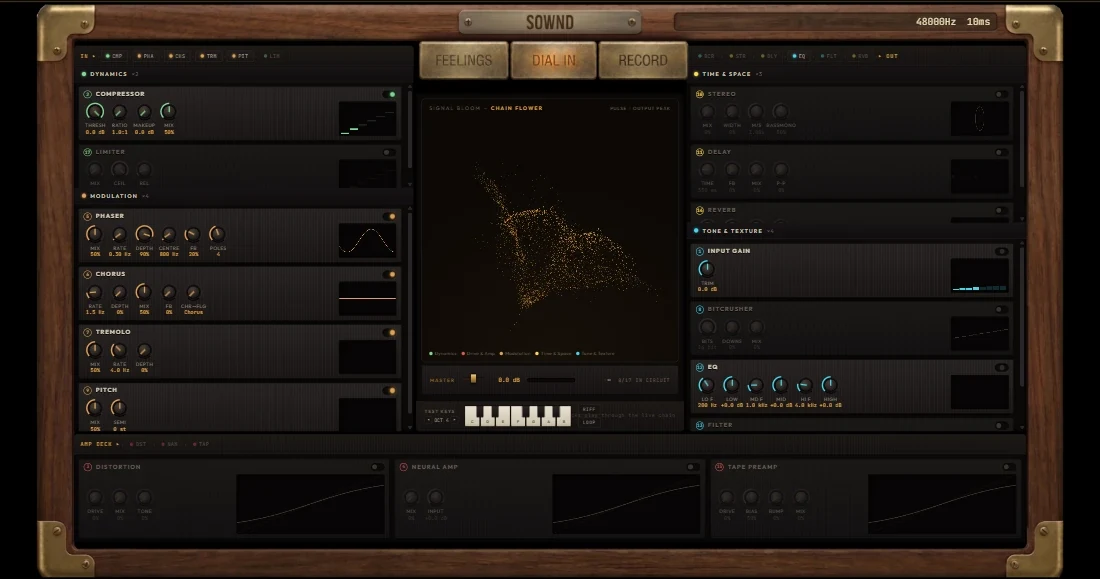
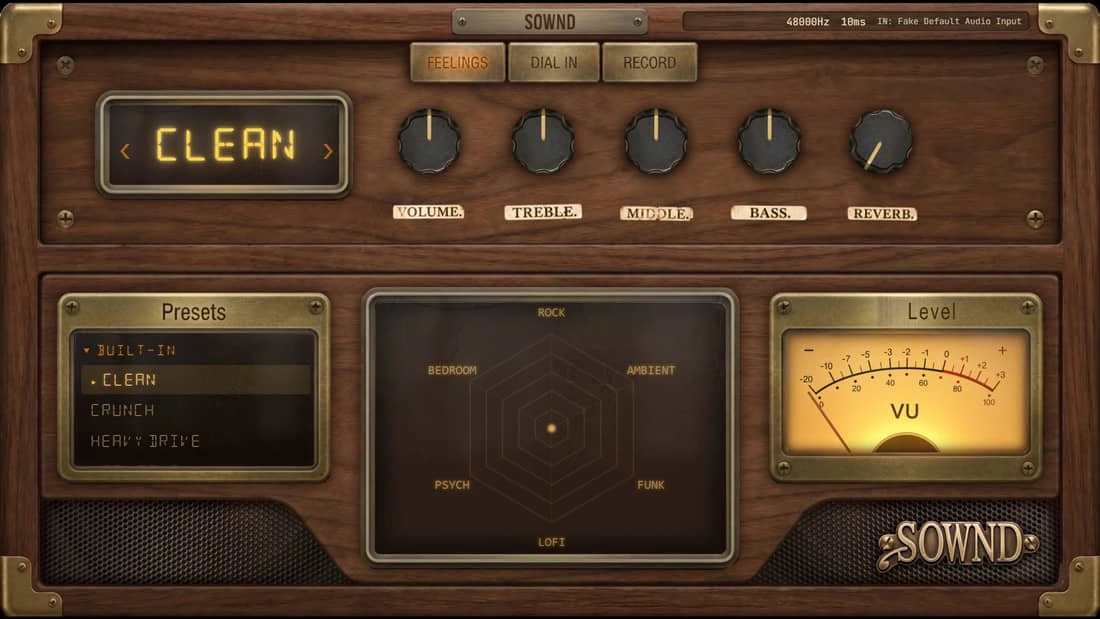
If X is any interface on this list — yes. They're all class-compliant: your browser sees them as a standard audio input. Pick the device card whose meter moves when you strum, and play.