How it works, in one breath
A real amp shapes your signal in stages — preamp gain, tone stack, power-amp sag, speaker, microphone, room. A sim models each stage mathematically and chains them. Feed it a clean signal and it produces what a microphone in front of that amp would hear.
That "miked amp in a room" detail matters: a sim doesn't try to be the amp in the corner of your bedroom, it's the amp as it would appear on a recording — which is the sound everyone actually wants.
Vs a real amp — honest tradeoffs
Where sims win
Cost (€0 vs €500+), volume (silent practice), variety (dozens of amps vs one), recording (already miked, already in the computer). For home players it's not close.
Where real amps win
Moving air. The physical shove of a speaker cabinet in a room is a feeling sims can't give — for gigs and volume therapy, real iron still exists for a reason.
The boring truth
On recordings, pros blend sims and amps constantly — the audience cannot tell. At bedroom volume, only one of the two is allowed to make noise at all.
Why it moved to the browser
Amp sims used to be plugins that needed a DAW to live in — a €150-a-year apartment they couldn't leave. Browsers grew real-time audio; now the same DSP runs in a tab, with a recorder beside it.
That's the entire reason SOWND exists: the amp should be where the guitar already is — next to a computer — without a software cockpit between you and playing.
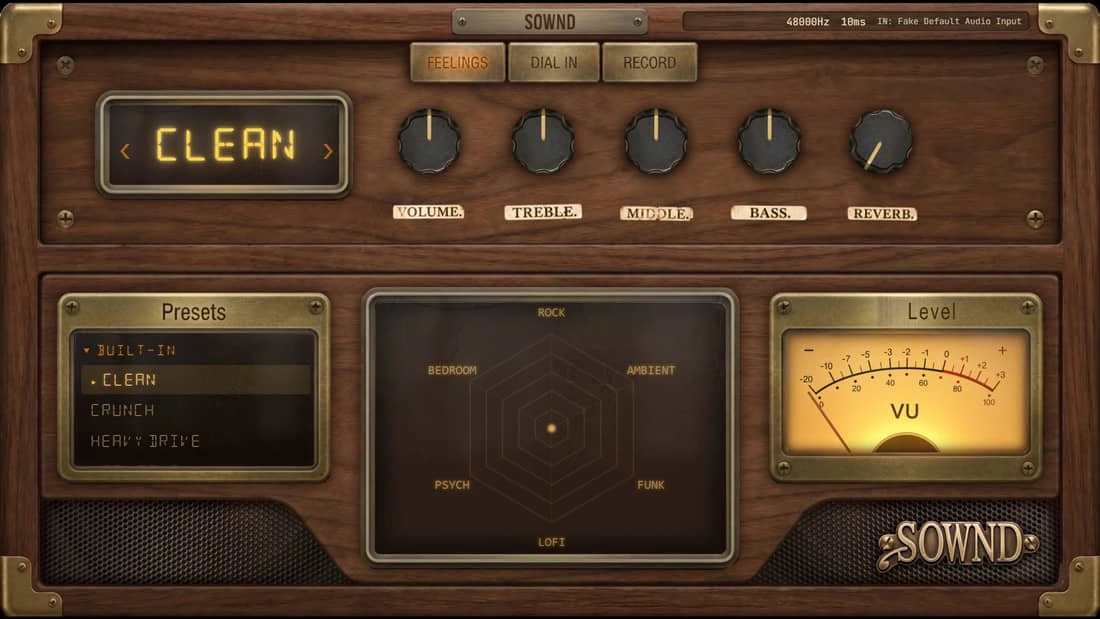
Try it while you read
Open the free Bare Wire tone in another tab — follow the steps live.
Quick answers
Do amp sims actually sound good?
Yes — modern sims are routinely indistinguishable from miked amps on recordings. The weak link is usually the input chain, not the math.
Is SOWND an amp sim?
Yes — a browser-based one: amp, pedalboard and recorder in one tab. No plugin host, no DAW, nothing to install.